Why Short-Form Video Is Not a Strategy by Itself
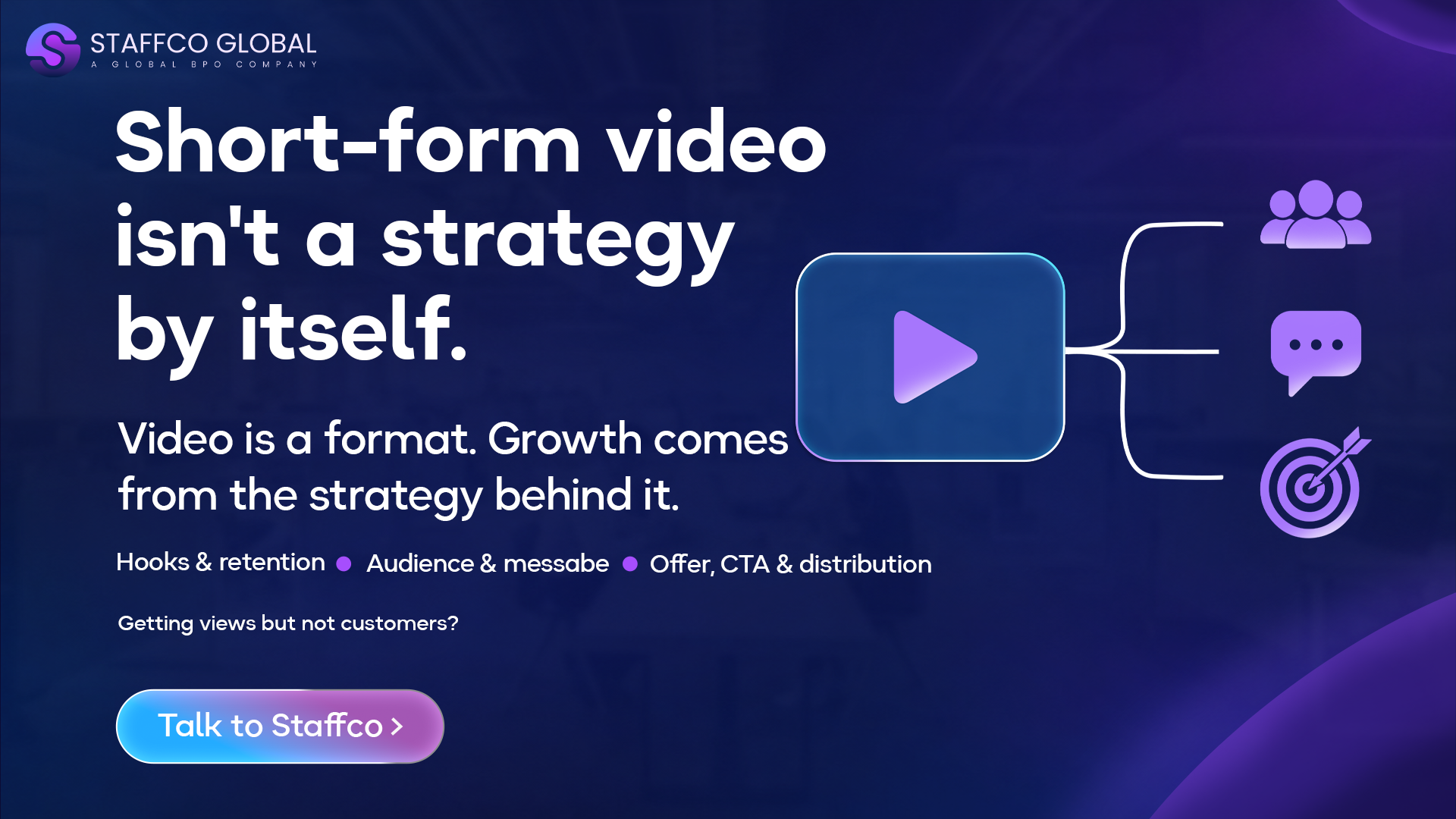
Why Short-Form Video Is Not a Strategy by Itself
STAFFCO GLOBAL · GROWTH & ACQUISITION | NOVEMBER 2026
Short-form video is everywhere. From Instagram Reels and TikTok to YouTube Shorts and LinkedIn video, businesses are investing in short videos to attract attention, increase visibility, and reach new audiences.
And for good reason: video can make complex ideas easier to understand, introduce a brand to potential customers, and communicate value in just a few seconds.
But there is one important distinction many businesses overlook:
Getting views is not the same as generating growth.
A video can receive thousands of views and still produce no meaningful inquiries. A Reel can attract attention without reaching the right audience. A creative hook can stop someone from scrolling without giving them a reason to become a customer.
The problem is not short-form video. The problem is treating a content format as a complete marketing strategy.
At StaffCo Global, we believe video works best when it is connected to a larger system built around audience understanding, brand positioning, demand generation, and customer acquisition.
Short-Form Video Is a Format, Not a Strategy
Short-form video is an effective way to deliver a marketing message. However, the format alone does not determine whether that message will generate business results.
Before producing a video, businesses need to understand:
- Who are we trying to reach?
- What problem does our audience want to solve?
- Why should someone pay attention to our message?
- What makes our business different?
- What action should viewers take after watching?
- How will the video reach the right audience?
Without clear answers, businesses can end up producing large amounts of content without building a consistent path toward customer acquisition.
A successful video strategy starts with the business objective, not the editing software.
1. The Hook: Give People a Reason to Stop Scrolling
The first few seconds of a short-form video matter. Viewers need a reason to keep watching.
A strong hook introduces a relevant problem, challenges an assumption, asks an interesting question, or promises useful information.
For example, a generic opening might say:
"Welcome to our company. Today, we're discussing our services."
A more compelling opening could be:
"Are your business operations costing you more than they should?"
The second example immediately introduces a business concern that may resonate with the intended audience.
Effective hooks should be:
- Relevant to the target audience.
- Clear and easy to understand.
- Connected to the video's actual message.
- Interesting without being misleading.
- Focused on a recognizable problem or opportunity.
The objective is not simply to grab attention. It is to attract the attention of people who could become customers.
2. Audience Targeting: Views From the Right People Matter
One of the biggest mistakes in video marketing is focusing entirely on reach.
A video may attract a large audience, but if those viewers have no interest in the company's services, the exposure may have little commercial value.
Businesses need to create content for a clearly defined audience.
For example, a B2B outsourcing company may want to reach:
- Business owners and executives.
- Insurance agency principals.
- Operations managers.
- Marketing directors.
- HR and recruitment leaders.
- Decision-makers looking to improve efficiency.
Each audience has different challenges, priorities, and reasons to consider an outside service provider.
Understanding those differences helps businesses create videos that speak directly to customer needs instead of publishing generic content for everyone.
The goal is not to reach everyone. It is to become relevant to the right people.
3. Messaging: Make Your Value Clear
A short-form video has limited time to communicate an idea. Every second should contribute to the message.
Strong video messaging explains what the audience needs to know and why it matters.
Instead of simply listing services, show how those services connect to real business challenges.
For example:
Generic message: "We provide outsourcing services."
Strategic message: "Need to expand your operations without adding every role to your internal team? Discover how a dedicated outsourcing team can support your business."
The second message connects a service to a customer need.
Businesses should develop consistent messaging around:
- The problems they solve.
- The audiences they serve.
- Their unique value proposition.
- Their expertise and experience.
- The outcomes their services are designed to support.
When messaging is clear, video becomes more than entertainment. It becomes a tool for communicating business value.
4. Retention: Keep Viewers Interested
Getting someone to start watching is only part of the challenge. The content also needs to give them a reason to continue.
Video retention refers to how long viewers stay engaged with a video.
To improve retention, businesses should:
- Remove unnecessary introductions.
- Focus each video on one main idea.
- Use clear and direct language.
- Include relevant visuals and on-screen text.
- Maintain a natural pace.
- Deliver on the promise made in the opening hook.
Avoid stretching a simple message into a longer video just to fill time.
A useful 20-second explanation can be more valuable than a 60-second video that repeats the same information.
The right video length depends on the subject, audience, platform, and purpose. The priority should always be delivering value efficiently.
5. The Offer and CTA: Turn Attention Into Action
A viewer may enjoy a video, agree with its message, and even visit the company's profile. But what should happen next?
This is where the offer and call to action become essential.
A call to action (CTA) tells viewers what to do next. It connects the content to the next step in the customer journey.
Examples include:
- Visit our website to learn more.
- Download our business guide.
- Schedule a consultation.
- Explore our services.
- Contact our team to discuss your needs.
The offer gives people a reason to take that action.
Depending on the business, the offer might be a consultation, a useful resource, a service assessment, a demonstration, or an opportunity to speak with a specialist.
A strong CTA should be specific, relevant, and aligned with the video's purpose.
Attention creates an opportunity. A clear next step helps turn that opportunity into an inquiry.
6. Distribution: Creating Content Is Only Half the Work
Even a well-produced video needs a distribution plan.
Publishing a video once and expecting it to generate consistent results is not a reliable growth strategy.
Businesses should consider where their audience spends time and how each platform supports discovery.
For example:
- Instagram Reels: Visual storytelling, brand awareness, and short educational content.
- TikTok: Discoverable videos built around relevant topics, questions, and interests.
- YouTube Shorts: Short educational explanations and introductions to longer content.
- LinkedIn: Professional insights, B2B education, and industry-specific perspectives.
- Facebook: Community-focused content, business updates, and customer engagement.
The same core idea can be adapted for multiple platforms, but the presentation should fit the platform and its audience.
A strong distribution strategy also considers publishing consistency, audience engagement, repurposing, and performance analysis.
The objective is to create multiple opportunities for the right people to discover your message.
7. Measure Business Results, Not Just Video Views
Views and likes can help indicate how content is performing, but they do not tell the entire story.
Businesses need to evaluate whether video marketing contributes to meaningful outcomes.
Important metrics may include:
- Reach: How many people are being exposed to the content?
- Watch time: How long are viewers staying engaged?
- Retention: At what points are viewers leaving?
- Engagement: Are people commenting, sharing, and saving the content?
- Profile visits: Are viewers interested enough to learn more about the business?
- Website traffic: Are videos encouraging people to visit the website?
- Qualified inquiries: Are potential customers contacting the company?
- Conversions: Is video contributing to measurable business opportunities?
Not every video needs to generate an immediate sale. Some videos introduce the brand, others educate potential customers, and others encourage action.
What matters is understanding the role each piece of content plays in the overall customer acquisition journey.
How to Build a Short-Form Video Marketing Strategy
A practical video strategy should connect creative production with business objectives.
Here is a simple framework:
Step 1: Define Your Objective
Decide whether the video is intended to build awareness, educate an audience, generate inquiries, or support conversions.
Step 2: Identify Your Audience
Understand who you want to reach, what challenges they face, and what information influences their decisions.
Step 3: Develop the Message
Choose one relevant topic and communicate your business value clearly.
Step 4: Create the Video
Develop a strong hook, useful content, appropriate visuals, and a clear CTA.
Step 5: Distribute Strategically
Adapt the video to relevant platforms and build a consistent publishing plan.
Step 6: Analyze and Improve
Review engagement, retention, traffic, and lead performance. Use those insights to improve future content.
This process transforms video production from an isolated creative activity into part of a repeatable marketing system.
The Real Power of Video Comes From the Strategy Behind It
Short-form video is not going away. It will continue to play an important role in how businesses communicate, educate audiences, and build brand visibility.
But businesses should not confuse producing more content with building a stronger marketing strategy.
The right hook attracts attention. The right audience creates relevance. The right message communicates value. The right offer gives people a reason to act. And the right distribution strategy helps the content reach potential customers.
When these elements work together, video becomes more than a social media post. It becomes part of a larger demand generation and customer acquisition system.
At StaffCo Global, we help businesses connect digital marketing, creative execution, and strategic support to their broader growth objectives.
Getting views but not customers? Let's connect your video strategy to acquisition.
📞 +1 (646) 799-5220 ✉️ marketing@staffcoglobal.com
Visit StaffCo Global to discover how a more strategic approach to marketing can help your business move forward.