The Dark Funnel: Why Buyers Know You Before They Contact You
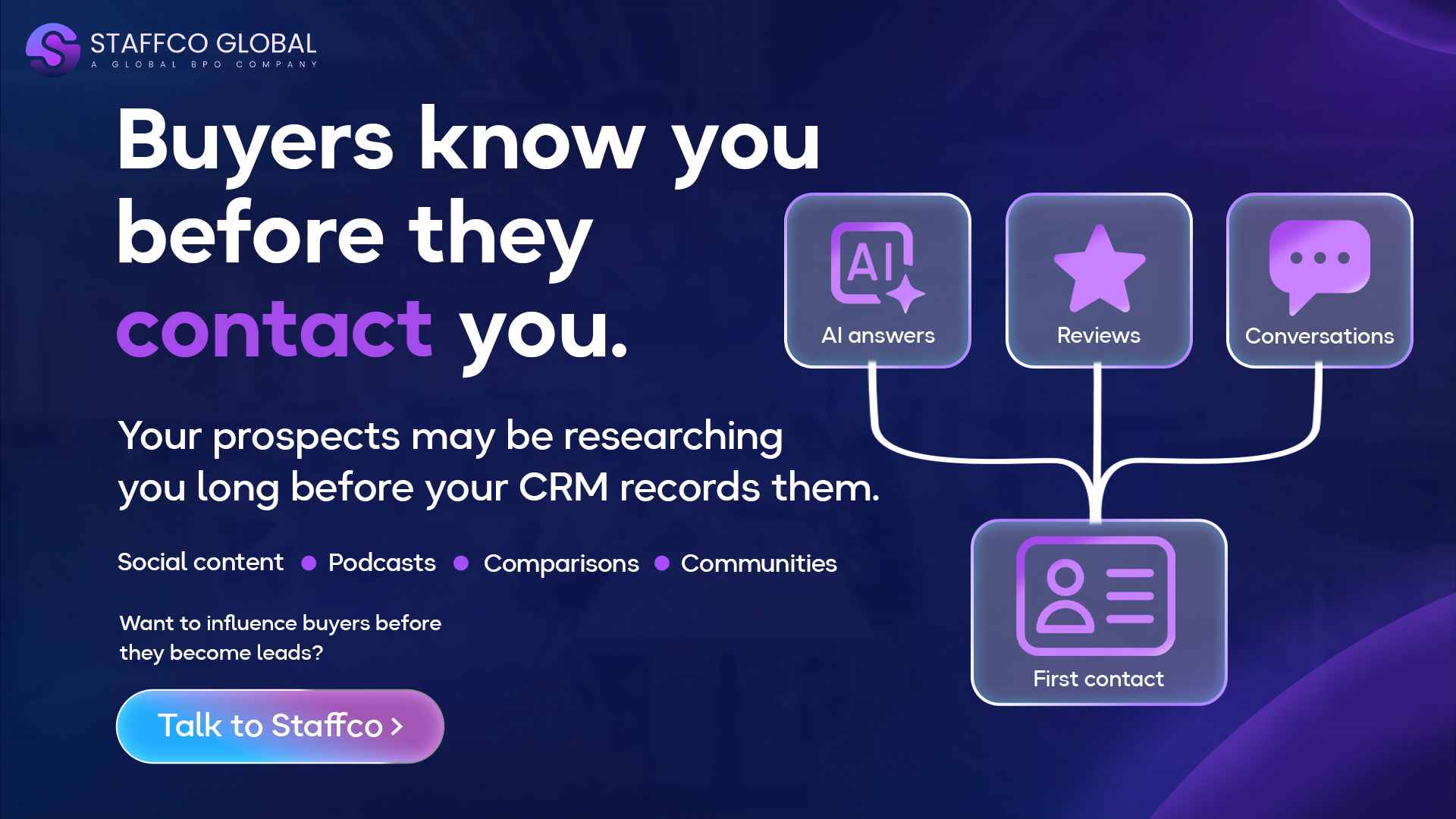
The Dark Funnel: Why Buyers Know You Before They Contact You
STAFFCO GLOBAL · GROWTH & ACQUISITION | NOVEMBER 2026
What if your next customer already knows your business before your sales team ever speaks with them?
They may have watched your videos, read your LinkedIn posts, compared your services with competitors, explored customer reviews, or asked an AI tool for recommendations.
Yet your CRM shows nothing.
No website inquiry. No contact form. No recorded sales conversation.
This is the reality of the modern B2B buying journey, where a significant part of the research and decision-making process happens before a prospect becomes a visible lead.
This less-visible part of the customer journey is often called the dark funnel.
For businesses investing in digital marketing and customer acquisition, understanding the dark funnel is essential. Because by the time a prospect contacts your company, they may already have formed an opinion about your brand.
What Is the Dark Funnel in B2B Marketing?
The dark funnel refers to the parts of the buyer journey that businesses cannot easily track through traditional marketing analytics and lead-generation systems.
It includes the research, conversations, recommendations, and content interactions that influence a customer's decision before they directly engage with your business.
Unlike a website visit or a completed contact form, many of these activities leave little or no information in your marketing dashboard.
For example, a business executive considering an outsourcing provider might:
- Ask an AI platform to recommend outsourcing companies.
- Read industry discussions on LinkedIn.
- Watch videos explaining outsourcing solutions.
- Compare service providers through online research.
- Read customer reviews and testimonials.
- Ask colleagues or professional contacts for recommendations.
- Listen to industry podcasts discussing operational efficiency.
By the time that executive visits your website and requests a consultation, much of the decision-making process may already have happened.
Your marketing may be influencing buyers long before your analytics can identify them.
1. AI Search Is Changing How Buyers Discover Businesses
AI-powered search is creating new ways for customers to research companies, compare solutions, and find recommendations.
Instead of simply searching for a list of providers, buyers can ask AI tools questions such as:
- What are the best outsourcing solutions for insurance agencies?
- How can a company reduce operational costs through outsourcing?
- What should businesses look for when choosing a BPO provider?
- Which companies offer dedicated back-office support?
These searches can introduce buyers to brands through AI-generated answers, recommendations, and cited sources.
This creates a new visibility challenge for businesses.
Your company needs more than a website that ranks for a few keywords. It needs a clear digital presence that communicates what it does, whom it serves, and why its expertise is relevant.
Useful website content, industry insights, service explanations, credible third-party mentions, and consistent brand information can all contribute to how potential customers discover and evaluate a business.
The goal is to make your brand easier to understand, find, and consider across different discovery channels.
2. Social Media Influences Buyers Before They Become Leads
Social media is no longer just a channel for publishing company announcements.
Platforms such as LinkedIn, YouTube, Instagram, and Facebook allow buyers to explore businesses, understand their services, and evaluate their expertise.
A potential customer might discover your company through a LinkedIn article, watch a short video explaining your services, or come across a team member sharing an industry insight.
Even if they do not click through to your website, that interaction may influence their perception of your brand.
Businesses should use social media to create a consistent stream of valuable information.
Consider publishing:
- Industry insights and expert opinions.
- Educational videos and practical tips.
- Explanations of common customer challenges.
- Service-focused content.
- Company updates and team expertise.
- Customer stories and approved testimonials.
The objective is not simply to increase followers.
It is to make your business familiar and relevant when potential customers begin evaluating their options.
3. Reviews and Social Proof Build Trust Before the First Conversation
B2B buyers rarely evaluate a company based only on its own marketing messages.
They also look for evidence that supports those messages.
Reviews, testimonials, recommendations, case studies, and professional references can help prospects understand what it might be like to work with a business.
This is particularly important when evaluating services that involve long-term relationships, operational responsibilities, or significant business decisions.
For example, a company considering an outsourcing partner may want to understand:
- Does the provider understand our industry?
- Can it support our operational requirements?
- Does it communicate professionally?
- What do other customers say about their experience?
- Can it demonstrate relevant expertise?
Businesses can strengthen their social proof by:
Collecting genuine reviews: Encourage satisfied customers to share honest feedback.
Publishing customer stories: Explain real challenges and how your services addressed them, with appropriate permission.
Demonstrating expertise: Share practical insights that show an understanding of your industry.
Maintaining brand consistency: Ensure your website, social profiles, and business listings communicate accurate and consistent information.
Trust is not built through promotional claims alone. It develops through credibility, transparency, and real customer experiences.
4. Communities and Peer Conversations Shape Buying Decisions
Some of the most influential conversations about a business happen outside its own marketing channels.
Buyers discuss providers with colleagues, business partners, industry professionals, and online communities.
They may ask for recommendations in professional groups, participate in industry discussions, or privately exchange opinions about companies they are considering.
These conversations are difficult to track, but they can influence purchasing decisions.
For B2B companies, this makes industry participation an important part of demand generation.
Businesses can build familiarity and credibility by:
- Participating in relevant professional discussions.
- Sharing useful industry knowledge.
- Contributing thoughtful perspectives on common challenges.
- Supporting educational communities.
- Building relationships with industry professionals.
- Encouraging employees and experts to share their knowledge.
The goal should not be to turn every conversation into a sales pitch.
It should be to become a valuable and recognizable contributor in the spaces where potential customers seek information.
5. Podcasts, Videos, and Industry Content Expand Brand Visibility
Not every buyer discovers a company through a traditional search.
Some discover businesses while listening to a podcast, watching an interview, attending a webinar, or consuming educational content.
These experiences introduce brands in a more informative and engaging environment.
For example, an executive listening to a podcast about business efficiency may encounter an outsourcing provider discussing operational challenges and potential solutions.
That introduction may not generate an immediate website visit. However, it can create awareness that influences a future purchasing decision.
Businesses should consider expanding their content beyond standard promotional posts.
Useful formats include:
- Industry podcasts and interviews.
- Educational video content.
- Expert discussions and webinars.
- Detailed blog articles.
- LinkedIn thought leadership.
- Downloadable guides and resources.
The best content provides real value while making the company's expertise and positioning clear.
6. Comparison Research Happens Before the Sales Call
By the time a prospect contacts your company, they may already have compared several providers.
They might have reviewed pricing information, service descriptions, company websites, customer feedback, and industry expertise.
This means your website needs to answer important questions before a sales conversation begins.
A strong B2B website should clearly explain:
What you offer: Make your services easy to understand.
Who you serve: Identify your target industries and customer types.
What problems you solve: Connect your services to real business challenges.
Why your business is different: Communicate your expertise and positioning.
What happens next: Make it easy to request information or schedule a conversation.
If potential customers cannot quickly understand your value, they may move on to another provider.
Your website should not simply introduce your company. It should help buyers make informed decisions.
7. How to Build a Marketing Strategy That Influences the Dark Funnel
The dark funnel cannot be tracked completely, but businesses can take practical steps to improve their visibility and influence across the buyer journey.
Here is a framework for building a stronger B2B demand generation strategy.
Step 1: Understand Your Buyer's Research Journey
Identify the questions, challenges, and concerns that influence your customers before they contact a provider.
Think about what they search for, what they compare, and what information helps them make decisions.
Step 2: Strengthen Your Brand Positioning
Make it immediately clear what your business does, whom it serves, and why customers should consider it.
Consistent positioning helps buyers recognize your company across websites, search results, social media, and industry discussions.
Step 3: Create Content That Answers Real Questions
Publish useful content that supports different stages of the buyer journey.
This includes educational articles, service pages, videos, industry insights, comparison guides, and frequently asked questions.
Step 4: Build Credibility and Social Proof
Develop a stronger collection of genuine reviews, customer testimonials, approved case studies, and expert insights.
Make your credibility visible across the channels where buyers research your business.
Step 5: Maintain a Consistent Multi-Channel Presence
Your website, social media profiles, videos, blog articles, and external brand mentions should reinforce a consistent message.
The objective is to create multiple opportunities for potential customers to discover and evaluate your business.
Step 6: Connect Marketing Visibility to Customer Acquisition
Make sure the journey from awareness to inquiry is clear.
Use relevant calls to action, effective landing pages, lead capture systems, and follow-up processes to help interested prospects take the next step.
Step 7: Measure More Than Form Submissions
Traditional lead metrics remain important, but they do not tell the entire story.
Consider tracking:
- Branded search growth.
- Organic website traffic.
- Social media reach and engagement.
- Referral traffic.
- Direct website visits.
- Content engagement.
- Qualified inquiries.
- Sales conversations and conversions.
Combine these indicators with customer feedback and sales-team insights.
Ask new customers how they first heard about your business and what influenced their decision.
This can reveal marketing touchpoints that traditional analytics may not capture.
The Dark Funnel Is Not a Reason to Abandon Measurement
It is important to remember that not every untracked interaction leads to a sale, and not every increase in brand visibility translates into revenue.
The purpose of dark funnel marketing is not to guess what buyers are doing.
It is to recognize that the customer journey is broader than the activities recorded in your CRM.
Businesses should continue measuring website performance, leads, conversions, and acquisition costs while developing a stronger understanding of the less-visible interactions that influence purchasing decisions.
When traditional analytics and customer insights work together, businesses can make better marketing decisions.
Your Prospects May Know You Before Your CRM Does
The modern B2B buyer journey starts long before a contact form is completed.
Potential customers are researching through AI answers, online reviews, social media, professional communities, podcasts, and comparison content.
By the time they reach your sales team, they may already know your services, understand your positioning, and have compared you with competitors.
That is why brand visibility, useful content, social proof, and consistent positioning matter at every stage of the buying journey.
Your prospects may be researching you long before your CRM records them. Make sure they find a reason to choose you.
At StaffCo Global, we believe effective growth requires more than generating leads. It requires a coordinated approach to brand visibility, digital marketing, content, and customer acquisition.
Want to influence buyers before they become leads? Talk to StaffCo.
📞 +1 (646) 799-5220 ✉️ marketing@staffcoglobal.com
Visit StaffCo Global to explore how strategic marketing and business support can help your company grow.